3 Day Cyprus Itinerary
If you’re looking for a comprehensive way to see the cultural and historical highlights of beautiful Cyprus while also enjoying some well deserved beach time, this post is for you.
Why Cyprus Is Worth Your Time
Cyprus is the third largest island in the Mediterranean and it punches well above its weight. The water is a shade of blue that I had trouble believing was real, and the coastline shows this striking contrast of red and ochre rock against turquoise sea. The history goes back thousands of years, with Roman mosaics, ancient tombs, and a divided capital city that exists in a political grey zone unlike anywhere else on earth. And yet Cyprus still feels under the radar compared to Greece or Italy, which means you get world-class sites without the crowds. Getting around is easy, the roads are good, English is widely spoken in the south, and the food is excellent if you know where to look.
Logistics: Getting There and Getting Around
Flights: Cyprus has two international airports. Larnaca (LCA) is the main hub and where most visitors arrive. Paphos (PFO) in the west handles a lot of budget and charter European flights. From Tel Aviv the flight is under an hour; from most European cities it is two to four hours.
Car rental: Essential. Public transit will not get you to Cape Greco, the Tomb of the Kings, Aphrodite’s Rock, or most places worth going. The one critical thing to know: Cyprus drives on the left. There are highway signs reminding you, which is both helpful and a little funny. Give yourself grace on day one and you will adapt quickly.
Currency: Euros throughout the Republic of Cyprus (the south). In North Cyprus they use the Turkish lira, though euros are widely accepted.
Safety: Cyprus is one of the safer countries I have visited. I traveled solo, wandered unfamiliar neighborhoods, and never felt uncomfortable. Standard awareness applies but you can relax here.
Where to Stay
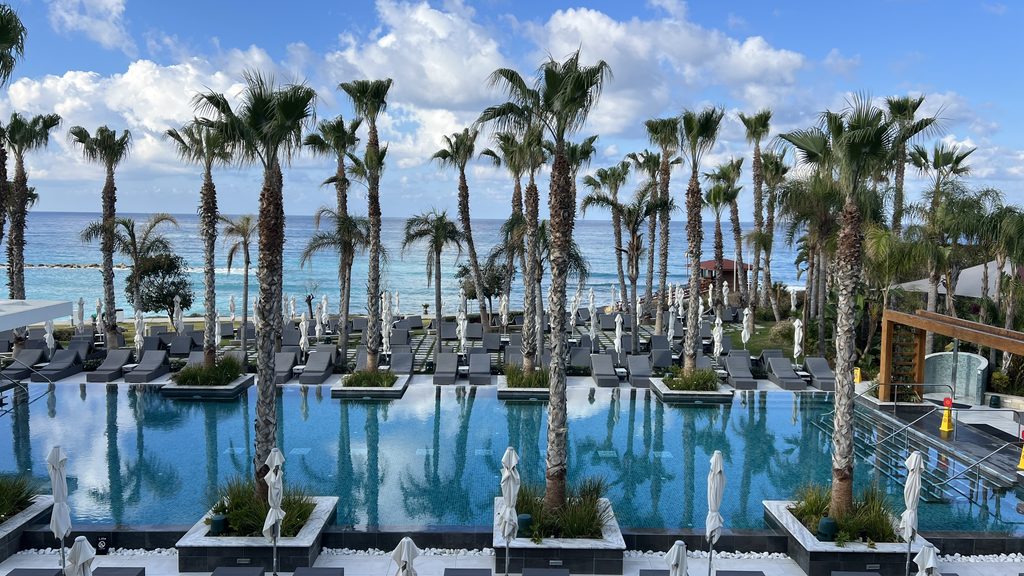
Base yourself in Paphos for this itinerary. It sits on the southwest coast close to the best archaeological sites and is a comfortable drive to Nicosia and Larnaca on your final day. I stayed at the Amavi Made for Two Hotel and it was one of the nicest properties I have stayed at in recent memory. Adults-only, right on the water, and the included breakfast buffet was extraordinary: fresh fruit, local cheeses, warm dishes, and actual fresh honeycomb.
Day 1: Cape Greco and the East Coast
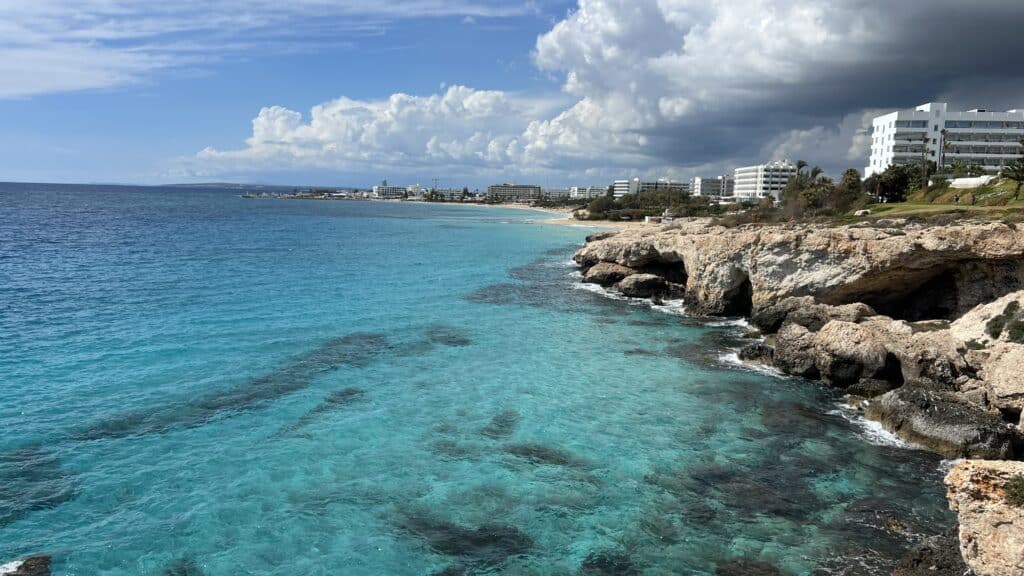
My first day started with picking up my rental car and driving southeast toward Cape Greco National Park. Cape Greco sits at the eastern tip of the island and the coastline is extraordinary: limestone cliffs above water that is turquoise with immense visibility. There are designated trails but most people just pull off the road wherever something catches their eye and walk along the rocks. Be mindful of the edges — the drops are real and there are no guardrails.
I happened to visit on Clean Monday, a major Greek Orthodox holiday marking the start of Lent. The park was full of families grilling and flying kites, festive and entirely un-touristy. The caveat: almost everything in Cyprus closes on major Orthodox holidays, truly closes, like Christmas in the US. If your dates overlap with one of these, have food figured out in advance.
I then drove to my hotel and arrived in time to watch the sun go down over the Mediterranean. The sky stayed lit long after sunset and the sea held all of the color. It was a perfect first night.

Day 2: Paphos — Tombs, Ruins, Shipwrecks, and Souvlaki
Paphos is an archaeological wonderland, a harbor town, and a resort destination all layered on top of each other. Here is how I would structure the day.
Tomb of the Kings
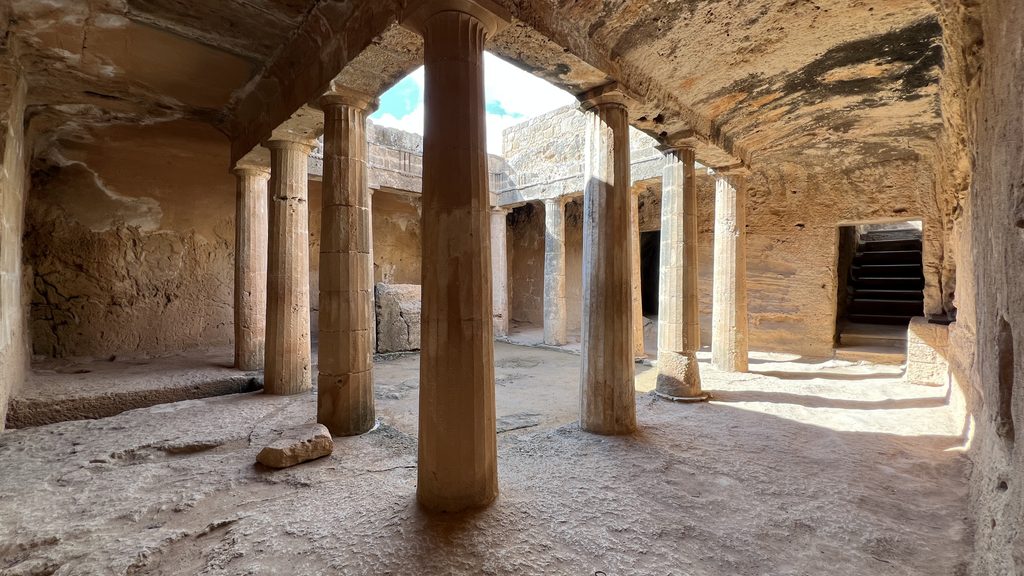
Located just north of town right along the coast, the site contains elaborate underground tombs carved from solid rock, built for Cypriot nobility between roughly the third century BCE and third century CE. It’s over 2,000 years old, incorporating Egyptian architectural elements, and remarkably well preserved. You can descend into the tombs and wander freely for one to two hours. Download the app beforehand as on-site signage is limited. Bathrooms are at the entrance.
Edro III Shipwreck
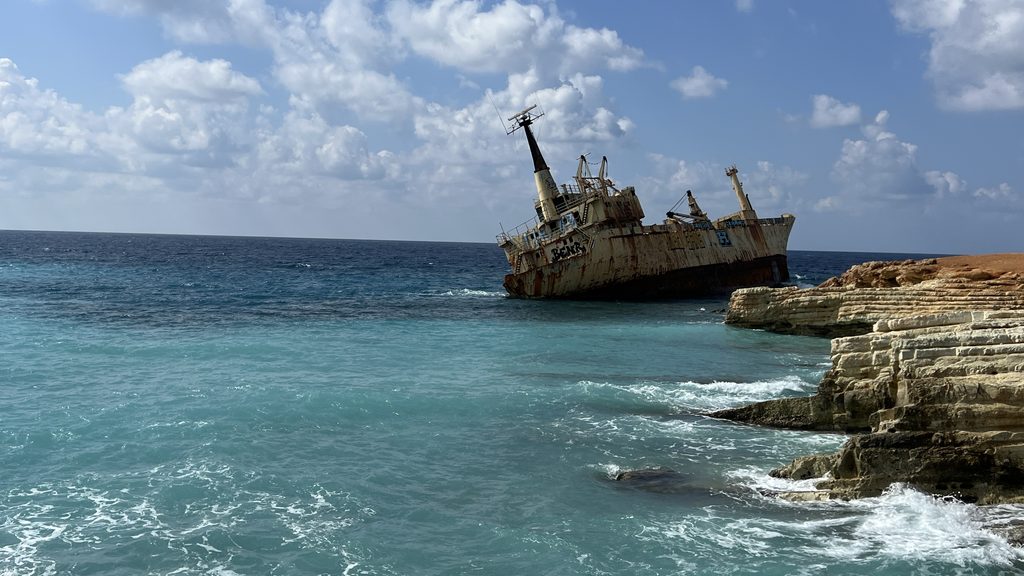
Drive north along the coast to see this cargo ship that ran aground in 2011 and has been rusting on the rocks ever since. The wreck is striking, but what really makes this stop worthwhile is the landscape. Afterward, drive up into the hills behind for vistas and lunch at a small, unpretentious restaurant in Pegeia (La Casa Gin Garden).
Paphos Archaeological Park
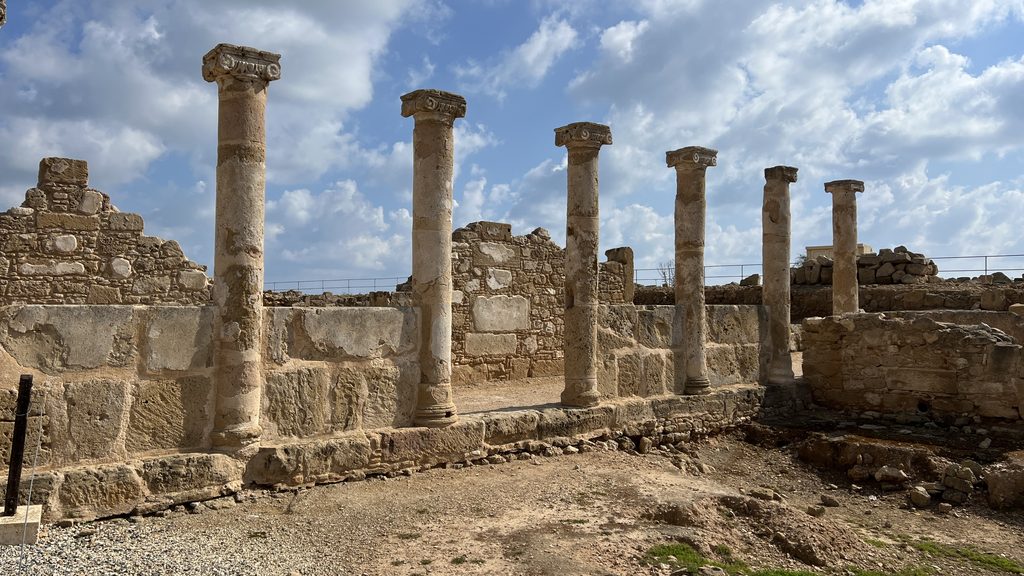
Back in town, this UNESCO World Heritage Site is the afternoon’s main event. The centerpiece is the House of Dionysus and surrounding Roman villas, which contain extraordinarily detailed mosaics depicting Greek myths that are still vivid from roughly the fourth century CE. There is also a Roman odeon still used for performances. Budget at least two hours. One honest frustration: the signage is inconsistent and some labeled features have been removed with no explanation. Download the app and use it as your guide. If you are short on time, focus on the front section where the mosaics are and skip the city walls on the far perimeter.

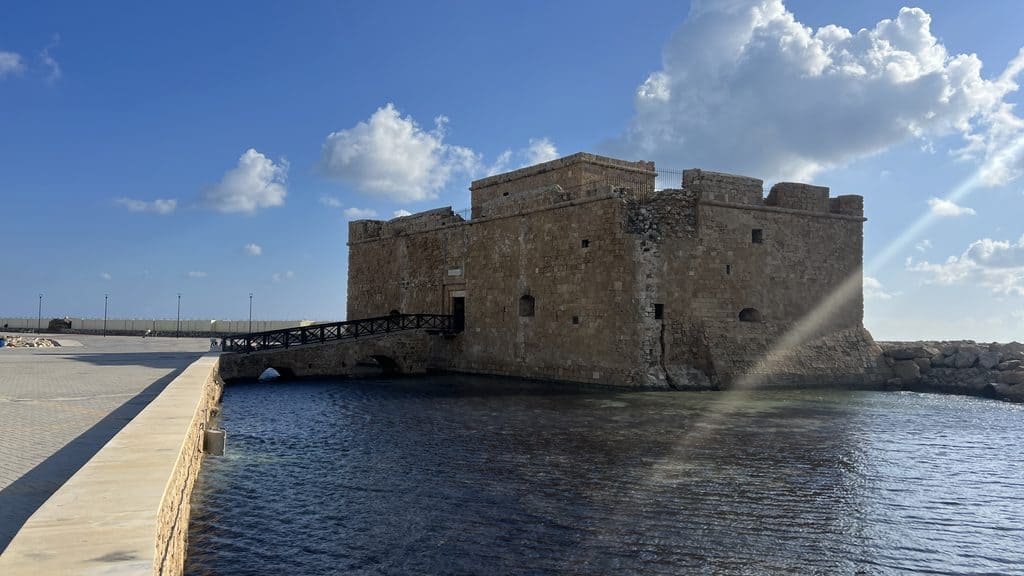
Paphos Castle
A quick stop at the medieval harbor fort. About €2.50 to enter and takes ten minutes. The main reason to go is the view from the top looking back across the harbor toward the mountains. Nice photo, nothing more.
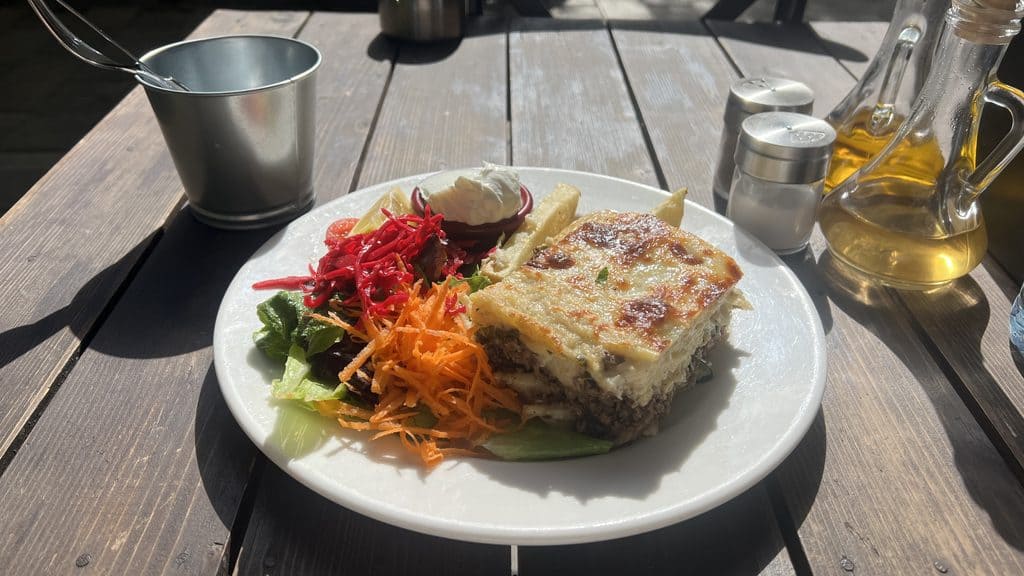
For dinner, skip the waterfront strip. If someone is standing outside trying to wave you in, keep walking. I ate at Sparta Café, a simple place across from the grocery store, and had one of the best souvlaki of the trip for six euros. The place was full of locals who had clearly been sitting there for hours. That is the signal you want. Also worth knowing: Cyprus has a surprising amount of Asian and Indian restaurants if you need a break from Greek food.
One last Paphos note: the cats. They are everywhere and they are beautiful. Cyprus has a long history with cats and the ones in Paphos seem entirely unbothered by tourists, which makes them endlessly charming.
Day 3: Aphrodite’s Rock, Nicosia, and Larnaca
This is a full day with a lot of ground to cover. Leave no later than 8 AM.
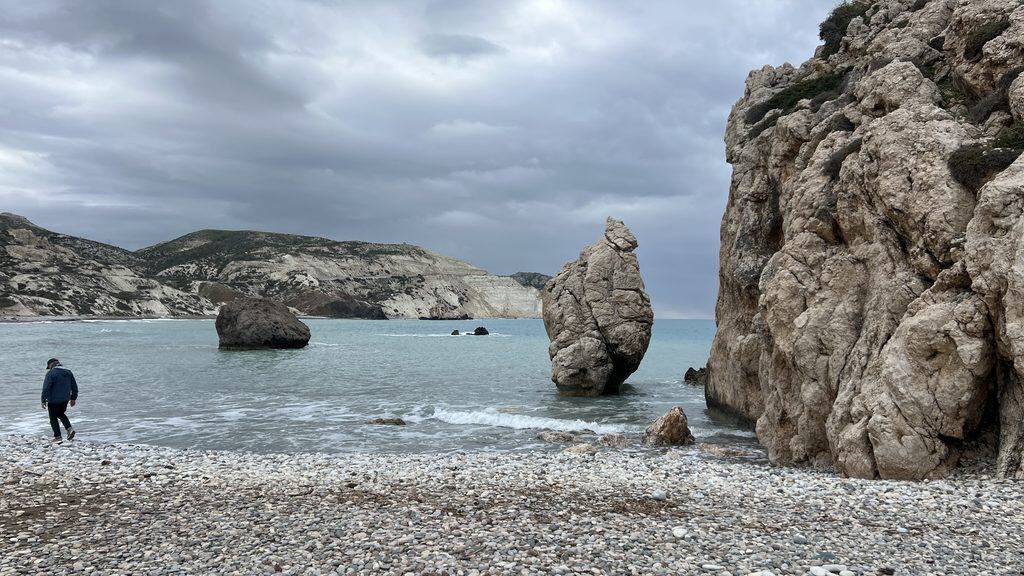
Aphrodite’s Rock
Stop here on your way north toward Nicosia. Petra tou Romiou is where, according to Greek mythology, Aphrodite was born from the sea foam. The beach below the viewpoint is pebbly and quiet. Worth fifteen to twenty minutes.
Nicosia and North Cyprus
Nicosia is the last divided capital city in the world, split by the UN-monitored Green Line since 1974. You can cross into North Cyprus on foot at the Ledra Street checkpoint with just your passport. You can park in some large lots for the day on the South Side before you walk in. Do NOT drive into North Cyprus, most rental companies don’t allow it and it’s not worth the hassle if you’re just visiting for a few hours.

Once you cross, the change is immediate: every sign is in Turkish, there are different license plates, Turkish flags everywhere, and less English spoken. It feels like a different country because in most practical ways it is. If you can, push past the tourist drag near the checkpoint and into the neighborhoods behind.
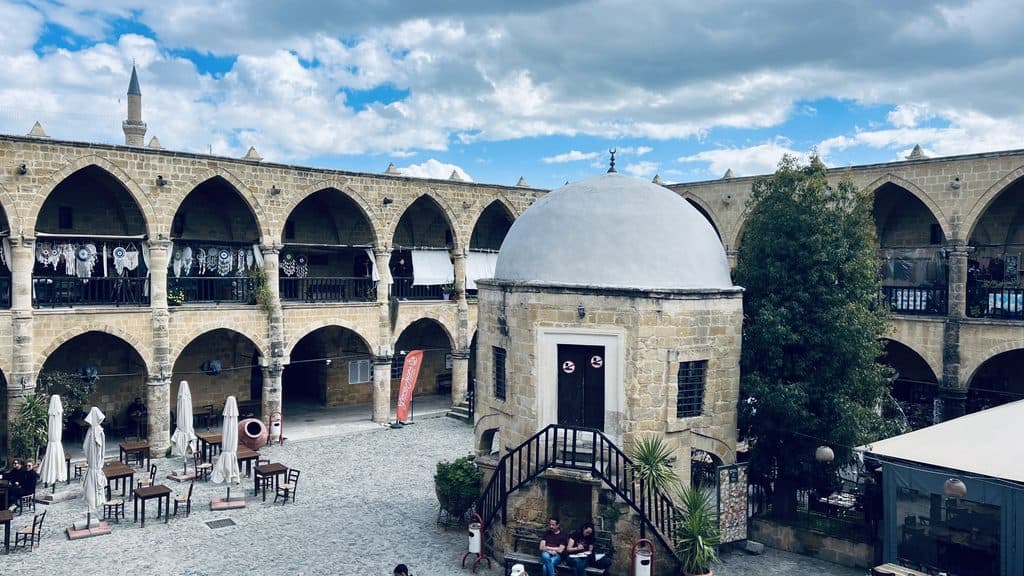
Worth doing in North Nicosia:
- The Selimiye Mosque, converted from a Gothic cathedral, is beautiful inside
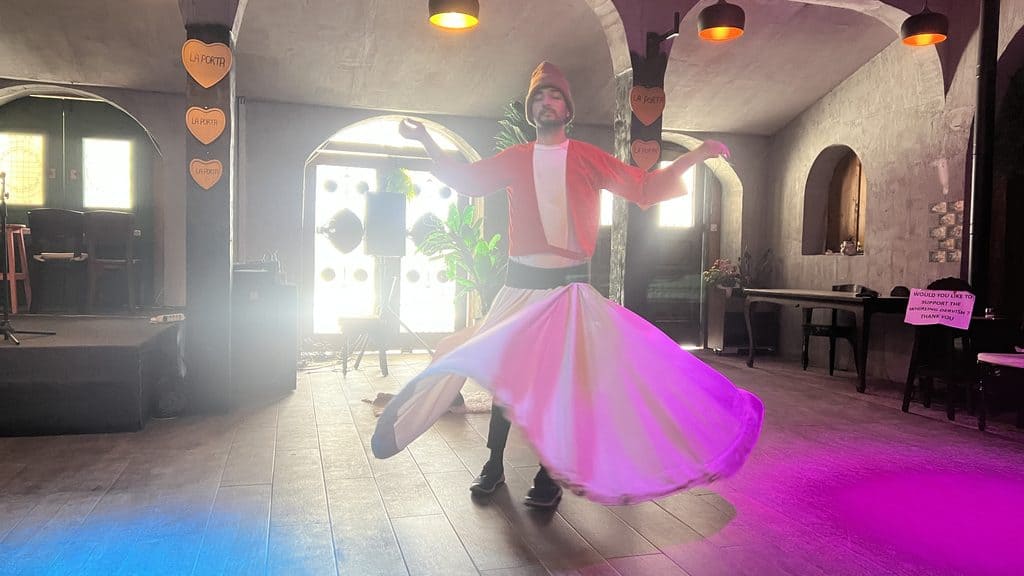
- A whirling dervishes performance if the timing works out
- The market behind the mosque for Turkish delights and local goods
- Wander neighborhoods behind the tourist drag, noticing and paying attention to the differences in the shops, architecture and language.

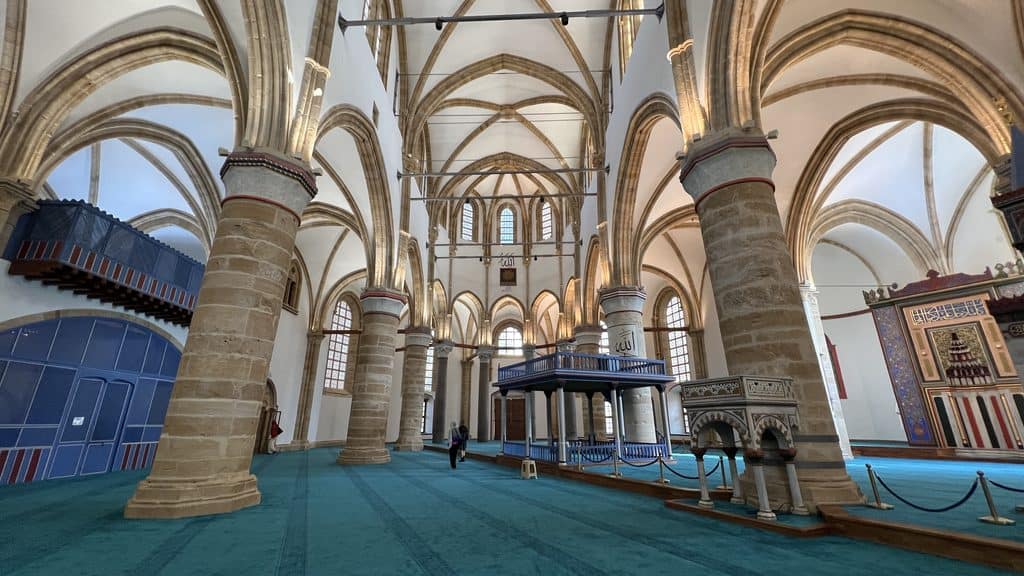
Back on the southern side, Nicosia is polished and modern by comparison. Go up the Shacolas Tower for a view across the whole city, the only place you can see both sides at once.

Larnaca
If you have time on day 3, continue here, otherwise these activities are good for a morning on day 4 before heding out to the airport.
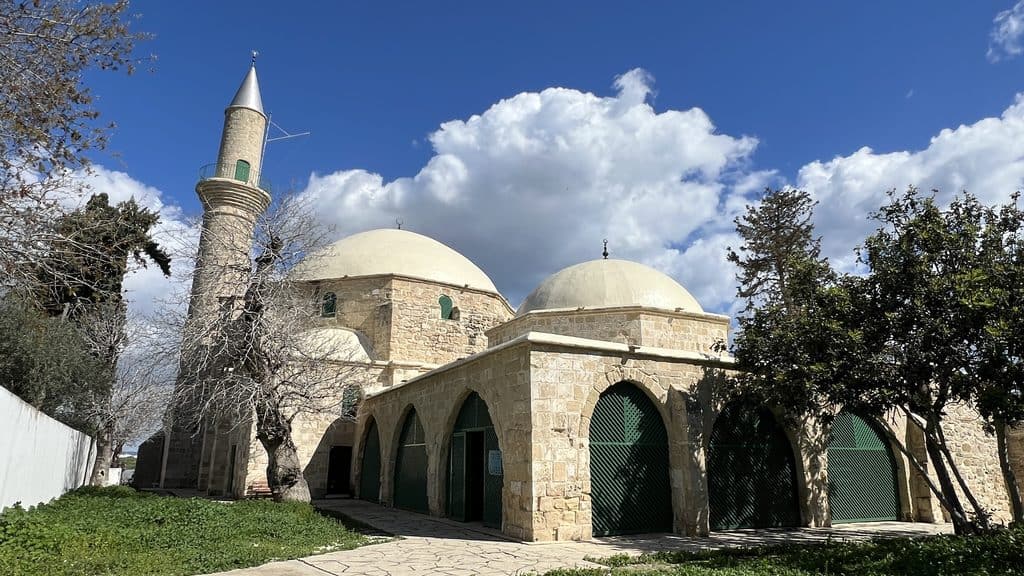
The Church of Saint Lazarus in the old town is a tenth-century Byzantine church worth a short visit. The bigger surprise is the Hala Sultan Tekke mosque (a UNESCO heritage site), sitting right on the edge of the Larnaca Salt Lake, and a good stop before heading to the airport. It is one of the most important Muslim pilgrimage sites in the world, and the setting is quietly remarkable: a white mosque surrounded by palms on the edge of a completely still, flat lake. In the cooler months (October through March) that lake fills with flamingos which are cool to look at too!