
Are We Actually Safe, or Just Comfortable?
On the risks we accept, the things we try to control, and how we decide what’s worth preparing for.
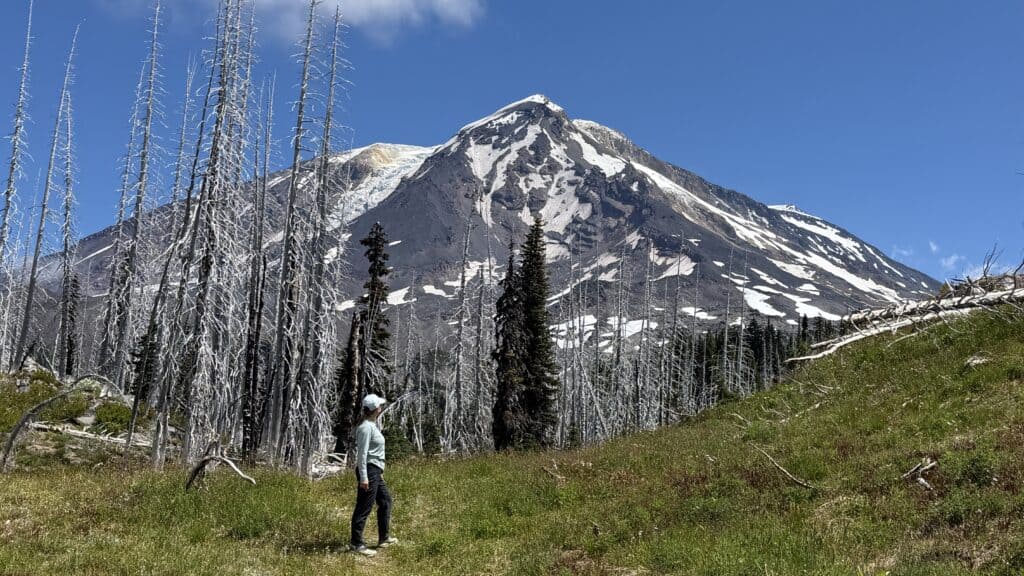
This summer, while hiking the Pacific Crest Trail through Washington, I noticed something interesting: almost nobody carried bear spray. Coming from British Columbia, where carrying bear spray is practically second nature on backcountry hikes, I found this surprising. I was hiking through hundreds of miles of wilderness, camping in bear country, often alone and sometimes miles from the nearest road. I encountered bears, too, including some that were less timid than I would have expected.
But what interested me most was what happened when I started sharing videos of my experience online. People began commenting on my bear spray. Not because I was using it or talking about bears, but simply because it was visible, strapped to the front of my backpack. “Why are you carrying bear spray?” “You don’t need that on the PCT.” “You’re carrying your fears.”
At first, I dismissed the comments as the usual internet noise. But then I started thinking about how differently people approached the same precaution depending on where they were hiking. On the Pacific Northwest Trail and on many trails back home in British Columbia, carrying bear spray was much more common. On the PCT, it was unusual enough to attract criticism.
Of course, different places have different wildlife risks, and there are legitimate reasons people might make different decisions. But I couldn’t help wondering how much of our perception of risk comes from the environment itself, and how much comes from the people around us. After all, when everyone around you treats something as unnecessary, it’s easy to start believing that it is.
And I don’t think this is just about hiking.
When we confuse what’s normal with what’s safe
There’s an interesting thing that happens when we repeatedly do something risky without experiencing a negative outcome: we begin to perceive it as less risky. Maybe you regularly drive a little faster than you should because you’ve driven that road a thousand times without incident. Maybe you’ve stopped buying travel insurance because you’ve never needed it. Maybe you don’t bother keeping an emergency fund because your job has always felt secure.
None of these decisions necessarily means something bad will happen. In fact, chances are that most of the time, nothing will. And that’s precisely what makes risk so difficult to evaluate.
We tend to judge our decisions by their outcomes. If everything works out, we assume we made the right choice. If something goes wrong, we look backward and wonder what we should have done differently. But a good outcome doesn’t necessarily mean we made a good decision. Sometimes we simply got lucky.
Over time, repeated good outcomes can make us increasingly confident that the precautions we once considered important were never really necessary. We stop carrying the extra layer, checking the weather, reviewing our insurance coverage, or maintaining a backup plan. Not necessarily because we’ve thoughtfully reassessed the risk, but because we’ve gotten comfortable with the idea that things will probably work out. And often, they do.
The trouble is that familiarity can make a risk feel smaller without actually changing the likelihood or consequences of something going wrong.
The comfort of doing what everyone else does
We’re also deeply influenced by what the people around us consider normal. If everyone in your social circle invests aggressively, taking on significant financial risk might feel perfectly reasonable. If everyone at work routinely skips a safety procedure, following it might begin to seem overly cautious. If everyone you know travels without insurance, buying it might start to feel like an unnecessary expense.
We look to other people to help us understand the world, and for good reason. Social norms often reflect valuable collective experience. We can’t independently research every decision we make, so we rely on the knowledge and judgment of others.
But there’s a difference between learning from other people’s experience and allowing their habits to substitute for our own judgment. Sometimes a community’s norms are the result of generations of hard-earned wisdom. Other times, they’re simply habits that have gone unchallenged.
And when enough people accept the same risk, it can begin to feel as though the risk no longer exists.
That was what I found so interesting about the reaction to my bear spray. It wasn’t that people had made a different decision than I had. It was the certainty with which some dismissed the need for a precaution altogether.
It made me wonder how often we do the same thing in our everyday lives, without even realizing it. Because if our assessment of risk changes depending on the people we’re surrounded by, how much of that assessment is actually our own?
How much control do we really have?
Of course, recognizing risk is only half the equation. The harder question is deciding what to do about it. We can’t prepare for everything. We can’t predict every outcome, eliminate every uncertainty, or protect ourselves from every possible misfortune. And attempting to do so comes with its own costs, whether that’s money, time, effort, or simply the mental energy spent worrying about things that may never happen.
You could spend hours researching every possible thing that might go wrong on a vacation, buy every type of insurance available, pack twice as much as you need, and still have your trip disrupted by something you never anticipated.
You could save aggressively for the future, avoid risky investments, and make every financially responsible decision you can think of, only to discover that circumstances beyond your control have changed the equation.
There’s a point at which preparation stops meaningfully reducing risk and starts becoming an attempt to control uncertainty itself. And uncertainty, unfortunately, is something we have to learn to live with.
This is where I think risk becomes less about following a set of rules and more about understanding our own priorities. How much effort are we willing to invest in preventing something unlikely? How serious would the consequences be if it happened? And how much control do we actually have over the outcome?
These questions don’t always have straightforward answers, and different people will reasonably arrive at different conclusions.
The trade-off between preparedness and freedom
I think about this often when I’m preparing for a trip into the backcountry. Every item I carry represents a trade-off. Extra water means more weight. Additional layers take up space. Emergency equipment adds cost and complexity. And the more I bring, the more effort it takes to get where I’m going.
But leaving those things behind carries its own trade-offs. If the weather changes, a water source runs dry, or I end up spending an unexpected night outside, the equipment I chose not to bring could suddenly matter quite a lot.
The question isn’t whether I can eliminate every possible risk. I can’t. It’s whether the cost of preparing for a particular possibility is reasonable given how likely it is, how serious the consequences might be, and how much the preparation would actually help.
And that same calculation applies to so many decisions outside the wilderness.
How much money should we keep in savings rather than investing it? How much insurance is enough? How much research should we do before making a major purchase? When does planning ahead make us more capable, and when does it simply prevent us from acting?
There’s no universal answer because risk tolerance is personal, and our circumstances are different. What feels like an unnecessary precaution to one person might represent a perfectly reasonable trade-off to someone else.
I also think there’s an important difference between preparing for uncertainty and expecting to control it. The first acknowledges that things might not go according to plan. The second assumes that, with enough effort, we can somehow guarantee that they will.
And that’s a promise no amount of preparation can make.
Choosing our risks, rather than inheriting them
We do this when we drive the same roads every day and become less attentive because nothing unexpected ever happens. We do it in workplaces where people cut corners because they’ve always done things a certain way. We do it when making financial decisions based on the assumption that the future will resemble the past.
We also do it in our personal lives, when we look around, see everyone else doing something, and take comfort in the idea that if it were truly dangerous, surely someone would have said something.
But collective confidence isn’t necessarily the same thing as collective wisdom. Sometimes a community’s norms are the result of generations of hard-earned experience. Other times, they’re simply habits that have gone unchallenged. Knowing the difference requires us to think independently.
I don’t think the lesson here is to be more fearful or more prepared for every possible outcome. If anything, I think it’s about becoming more comfortable with the fact that life involves uncertainty, and that we have to make decisions without knowing exactly how things will turn out.
We can consider the probability of something happening, the consequences if it does, and what it would cost us to prepare. We can learn from other people’s experiences without automatically adopting their conclusions. And we can recognize when additional precautions are genuinely useful versus when we’re simply trying to buy ourselves a feeling of control.
Because the goal isn’t to eliminate risk. It’s to make thoughtful decisions about which risks we’re willing to accept, which ones are worth preparing for, and which ones we have to let go.
The important thing isn’t whether we choose to carry the bear spray. It’s whether we’ve thought about why we’re carrying it—or why we’ve decided not to.


