
Journey to the PCT: Common Questions
As I continue to tell more people about this upcoming adventure, I’ve been getting a lot of good questions that I realize I haven’t answered here, and are not always so obvious to find online. So today’s post will be a series of Q & A’s on the basics of long distance backpacking and specifically some of the things that make the PCT what it is.
Will you ever sleep off the trail?
Yes, I hope to do some ‘zero’ days, i.e. zero hiking days where I check in to a hotel and sleep in a proper bed. I probably will do this in the heart of the Cascades near Stehekin, and possibly near Snoqualmie (as it’s not far from Seattle).
Will you ever shower?
Similar to the answer above, every 5-7 days I will be in or near civilization and will plan to do laundry, take a shower, restock my food supply and fix or replace any gear I need to along the way. Since the PCT is well trafficked, the towns it passes through or nearby are very accommodating to the needs of backpackers and often supply things like stove fuel, backpacking meals, etc.
How many clothes will you bring?
I plan on hiking in the same clothes everyday for 5-7 days. At night, I will change into my dry, warm base layers, only for sleeping. There is no point in bringing extra clothes because I will be very dirty and smelly no matter what I’m wearing. I love to shower and be clean so this is going to be tough for me. But I’ve learned over the years that once you are 1-2 days into a camping trip you just accept the mess. It’s much easier to be dirty in the woods than be dirty in civilization. In town, I’ll wear my rain gear while I wash all my clothes.
What does resupply look like?
I have the option to either resupply with what I can find in the groceries in the towns I pass through, or mail myself resupply. Many of the post offices and grocery stores along the way run a service where they will hold packages for hikers. I’m still thinking through my strategy but this is what I have so far:
- Section 1 hike ~80 miles, reach the town of Trout Lake. Joel (my husband) to meet me there with a resupply and join me on the trail.
- Section 2 hike ~65 miles, reach White Pass. There are no towns here, but Joel will have a resupply box in our car at the trailhead that I can use to resupply.
- Section 3 hike ~100 miles, reach Snoqualmie Pass. Take a zero day in the area and pick up a resupply box at Snoqualmie Inn or with family in the area (Snoqualmie is less than an hour drive from Seattle).
- Section 4 hike ~71 miles, reach Steven’s Pass. Take a zero day (maybe). Pick up a resupply box at Steven’s Pass Ski Resort.
- Section 5 hike ~126 miles, reach Stehekin. This is the longest push as it takes you through the North Cascades. Take a zero day. Pick up a resupply box in Stehekin.
- Section 6 hike ~90 miles. Can break it up after 20 miles get off trail and go to Mazama in Rainy Pass, otherwise power through to Canadian border (and back, 30 miles). Joel will come pick me up from Hart’s Pass, a few hours drive from our home in Vancouver.
Are you scared of hiking alone?
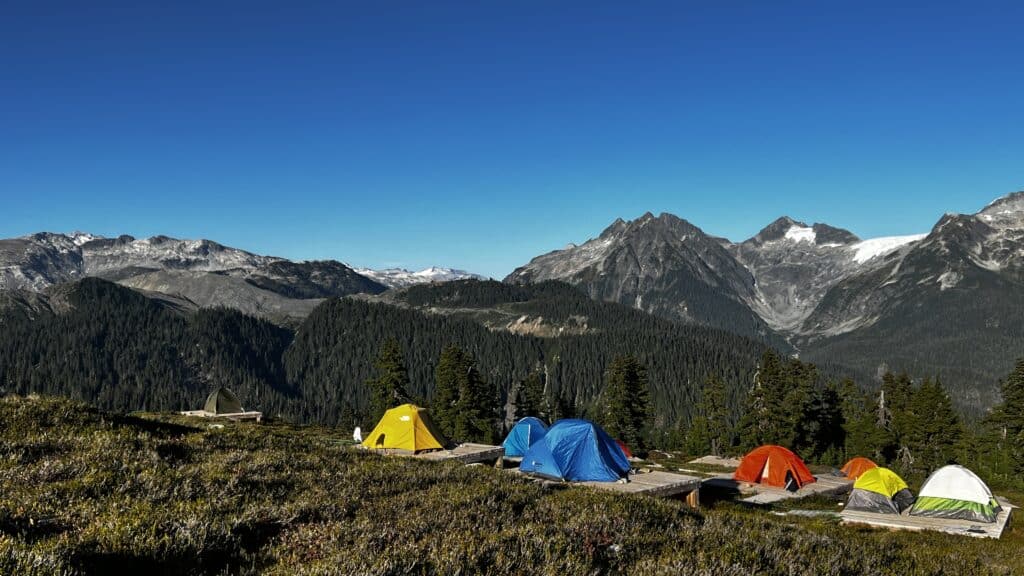
For some reason I’m not. I think partly because Washington state in the heart of summer is pretty busy on the trails for both weekend and day hikers (which intersects many of the places where I will be), the PCT is a very popular trail and many of the hikers who started at the Mexico border (around now!) will also be in Washington by then, so I actually don’t think I’ll be alone too much of the time. Probably some of the time though. I’ve never backpacked alone before, and I’ll be trying it out for the first time on the West Coast Trail in June (which is also a very heavily trafficked trail). I don’t like being in the dark in the woods by myself, but I am not planning on hiking after dark if I can help it. The sun sets close to 9:30pm in the Pacific Northwest in August so something would have to have gone very wrong during the day for me to still be out hiking at that time.
Are you scared of bears?
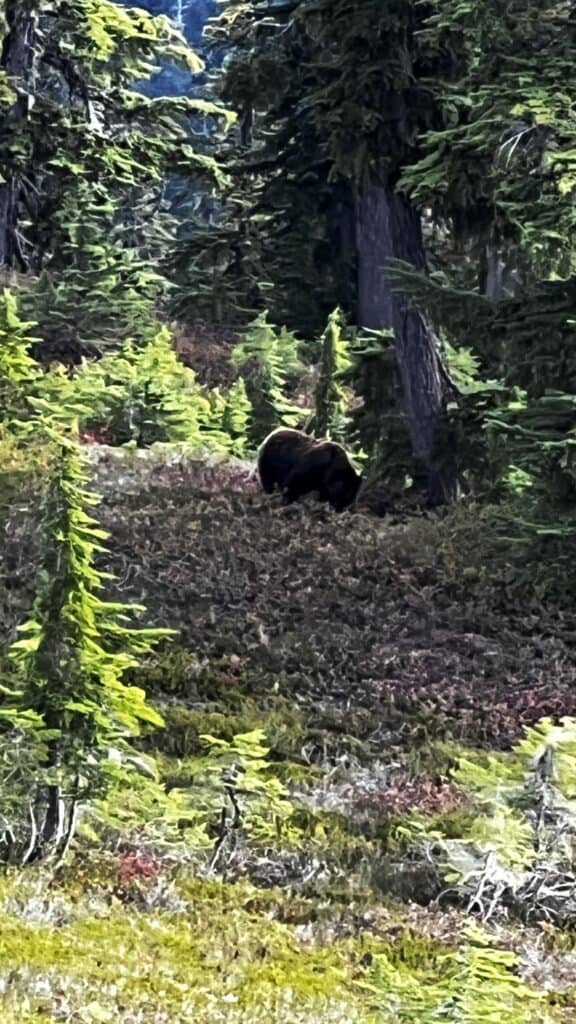
Not really. I’ve never crossed a bear directly in front of me on a trail – if that were to happen that would be pretty scary, which is why I am carrying bear spray. Every time I’ve seen a bear while hiking it felt like the greatest gift. To watch these beautiful creatures do their thing from afar is a sight to behold. In August, the bears in the Pacific Northwest are fattening up on berries and are likely going to be very distracted (and also not very hungry for anything but berries and salmon). Supposedly the real animal to fear is the cougar, but the saying goes that if you see a cougar, it’s too late anyway so I am just not going to worry about something I can’t control.
Is there anything you’re scared of?
I am concerned about getting very sick or injured while alone. I will have some basic first aid supplies with me but of course if I hit my head or fall unconscious then I can’t exactly help myself. That’s why I am carrying with me a Garmin Mini 2, which I take on all my hikes in the summer. Every night I will check in and in an emergency I can call for help. My family will know my exact plan and pace and if they don’t hear from me they can send in the cavalry. It’s not a completely fool proof plan but it’s about as good as you can get for being out in the wilderness. This is the biggest risk.
I’m sure there are things I should be scared of that haven’t even crossed my mind, but you just can’t spend your life worrying about the worst case scenario. If that were the way to be, no one would ever get out of bed. Arguably crossing the street outside my apartment here in Vancouver is a much more dangerous activity than hiking in the woods.
How are you training?
I currently climb 2x a week and do orange theory (HIIT workouts with running/rowing/weights) 2-3x a week. I’ll continue doing that until June, at which point I’m trading orange theory for day hikes in June and July. I’m going to try and get on a hike at least 2x a week to just keep my quads strong and practice going uphill with weight. Many of the local peaks can be climbed within a few hours and have between 500-1000m of elevation gain, meaning I don’t have to go far to get that practice in. The big practice hike will be the 75km West Coast Trail that I’ll be doing June 2-7 on Vancouver Island where I test out all my gear, weight, food, and how it all feels together (essentially a shake out).
How will you get around from the trailheads to the towns?
There is a great network of ‘trail angels’, i.e. very nice people who provide their information and who you can call for rides and other essential needs. There are trail angels for each section of the trail. Of course I won’t have cell service a lot of the time, so if I can’t reach someone I will be hitch-hiking.
What if something goes wrong?
Something most definitely will go wrong. That is how the entropy of the universe works. It bends towards chaos. You can’t guarantee the outcome. If that were so, it wouldn’t really be an adventure, would it? I’m trying to hedge my bets for success by buying the best gear, stress testing it, doing a lot of research, talking to people who have hiked it before, staying in shape, eating right, caring for my body. But even the best laid plans get messed up. I’ve learned this lesson many times in travel, and most recently when I fled the middle east in the beginning of the latest Iran War.
There are things I can try to control, and then lots of things you can’t. Like the weather. Or twisting an ankle. All you can do in this world is try your best, prepare as much as you can and let the universe catch you.
Why are you doing this?
I answered this in my first post but I think it bears repeating. I’m not out here having a midlife crisis. I’m out here living my life to the fullest because that is a very important value to me. I chose to do this for a few reasons:
- Misogi Challenge: There is immense value with challenging yourself annually. This is my big, beautiful challenge. I do a lot of challenging things all the time, so I wanted to pick something bigger than usual that would be at the edge of my abilities but not beyond them.
- I’m completely unencumbered. I don’t have dependents, I don’t have a dog, I have a job that I can pick up and leave easily. I can afford to not work for 6 weeks. I’m sure that won’t always be true. It’s a gift that I am taking advantage of in this special time in my life.
- I’m in the best shape of my life. And I’m not getting any younger. My knees work now, my back works now, but will they work so well next year? How about in 5? I’m not waiting to find out.
- I am excited to test the skills I’ve been building over the last few years hiking and backpacking in and around Vancouver.
- I want to see more of Washington state – and this is a great way to explore many different areas, so I know where I want to come back and explore next time.
Why aren’t you doing the full PCT?
Because even though I probably could find 5-6 months to do the whole trail at once, I honestly am not interested in hiking for that long. 4-6 weeks feels like a great length to hit a rhythm and experience the PCT culture without giving up the rest of my life. I have weddings and other travel that are important to me this summer. If I really enjoy this, maybe next year I’ll section hike Oregon. And then maybe part of California, etc. I always wanted to do the John Muir Trail which is part of the California section but I never could get the permits (it’s a very competitive lottery). Even hiking 1 week of this trail is more backpacking then I normally do in an entire summer, so I’m definitely going to get my fill.


